

E-2 Visa Business Plan Cost in 2026: What Are You Actually Paying For?
Learn how much an E-2 visa business plan costs in 2026, what affects the price, what professional writing services include, and why market research, competitor analysis, and financial modeling matter.

Case Study: Structuring a Bioengineering EB-2 NIW Business Plan Around a Clear National-Interest Argument
A bioengineering EB-2 NIW case can be strong on technical merit but still difficult to present clearly. This case study explains how analytical business-plan support helped turn a complex bioengineering profile into a structured proposed endeavor narrative supported by market logic, industry context, and U.S. need.

Case Study: Preparing an L-1A Business Plan for an Existing U.S. Office
This L-1A existing office case study explains how a USCIS-focused business plan can strengthen an extension or existing-office petition by connecting business activity, staffing, financials, and managerial or executive capacity.

EB-5 Business Plan vs. Feasibility Study: What Investors and Projects Need Before Filing
An EB-5 business plan and feasibility study serve different purposes. This article explains how market research, financial projections, use of funds, and job creation logic help support a credible EB-5 investment project before filing.

Case Study: Strengthening a Previously Rejected L-1A Business Plan
This L-1A business plan case study explains how a previously rejected new office petition was strengthened by improving the staffing plan, executive capacity narrative, operational structure, and USCIS-focused business planning logic.

Do You Need a Business Plan for an E-1 Treaty Trader Visa?
A business plan is not required by USCIS regulations for an E-1 Treaty Trader visa. The visa is built on existing trade, not a future investment proposal. But for new U.S. entities, growing trade relationships, and employee-based applications, the absence of a business plan creates evidentiary gaps that weaken an otherwise qualified petition. This article explains when a business plan is optional, when it is essential, and what it must cover to serve its function in the E-1 record.
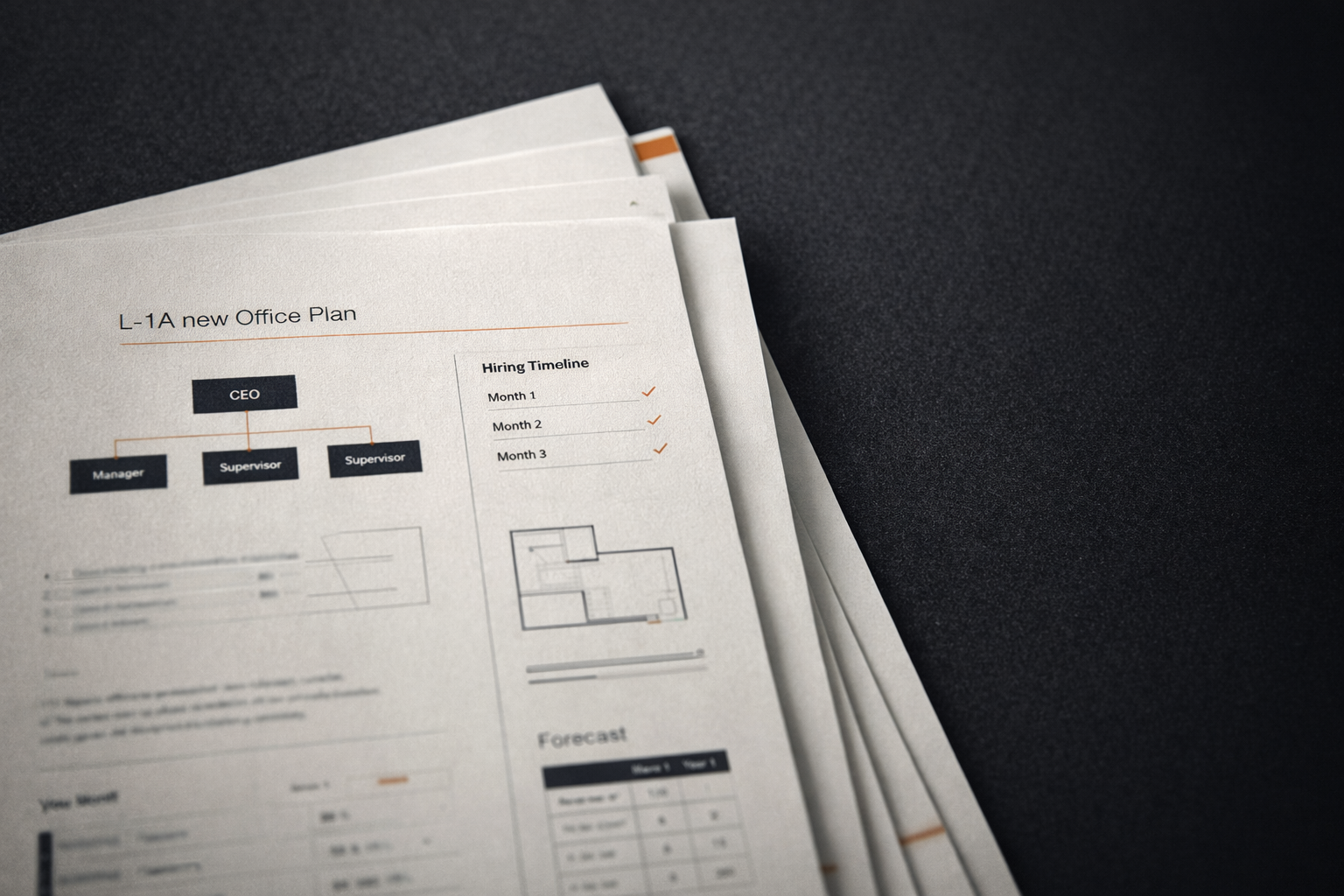
L-1A New Office vs. Existing Office: How the L1 Visa Business Plan Strategy Differs
New office and existing office L-1A petitions operate under the same statute but are evaluated through entirely different evidentiary frameworks. This article breaks down how business plan strategy shifts between the two, what USCIS is actually assessing, and why many filings fail despite otherwise viable businesses.

Expanding Your Canadian Business to the U.S.: What the L-1A Visa Requires and What Your L1 Business Plan Needs to Show
For Canadian companies using the L-1A new office route, the initial approval is granted for only one year, which makes the first business plan more than a filing document — it becomes the benchmark USCIS will later measure the U.S. operation against. At extension, the agency will look not just at whether the business exists, but whether it developed in a manner consistent with the original petition, including staffing, revenue, and the transferee’s executive or managerial role. This is why a strong L-1A business plan must be realistic, well-supported, and built to withstand extension-stage scrutiny, not simply to make the initial filing look ambitious.

How an L-1A New Office Business Plan Differs From a Standard Business Plan
An L-1A new office business plan is not just a standard business plan with immigration wording added on top. It must do more than describe the business opportunity. It must also show how the new U.S. operation will be structured, staffed, and developed to support a qualifying executive or managerial role within the required timeframe.

Does an EB-2 NIW Petition Need a Business Plan?
Do you need a business plan for an EB-2 NIW petition? Learn when a business plan is useful, how it supports national importance and execution readiness, and how it differs from a professional plan.

EB-2 NIW for Entrepreneurs: Can Entrepreneurs Apply for the EB-2 NIW Visa?
Entrepreneurs can qualify for EB-2 NIW even though USCIS does not define a separate “entrepreneurial NIW” category. This article explains how founder-led cases fit within the EB-2 NIW framework, what a proposed endeavor means, and how entrepreneur cases differ from more traditional professional NIW filings.

The Main Reasons E-2 Financial Projections Trigger Marginality Concerns in E-2 Visa Business Plans
Why do profitable E-2 financial projections still raise marginality concerns? This article explains the hidden issues adjudicators look for, including static growth, unrealistic expenses, owner compensation, and weak retained earnings.
Why Generic E-2 Business Plans Are Easy to Spot
Generic E-2 business plans are easy for consular officers and USCIS adjudicators to spot. This article explains the common red flags, from template-style narratives to unrealistic financials and weak local market analysis.

Why Strong E-2 Investments Still Get Questioned at the E-2 Visa Business Plan Stage
Strong E-2 investments do not guarantee approval. Even heavily capitalized cases can face scrutiny when the business plan reveals operational gaps, timeline inconsistencies, or role mismatches. This analysis explains why well-funded applications still receive RFEs and how adjudicators evaluate coherence between investment, operations, and executive strategy.

E-2 Marginality Explained: How Business Plans Demonstrate Growth
E-2 marginality is not simply about profitability — it is an evaluation of operational scalability and economic contribution. This analysis explores how adjudicators assess marginality risk and how structured business plans demonstrate credible growth beyond self-employment.

Professional Plan vs. Business Plan in EB-2 NIW Petitions: Differences, Purpose, and How to Choose
Learn the difference between a business plan and a professional plan in EB-2 NIW petitions. This guide explains when each is appropriate, what USCIS expects, and how the right plan supports national importance and feasibility.
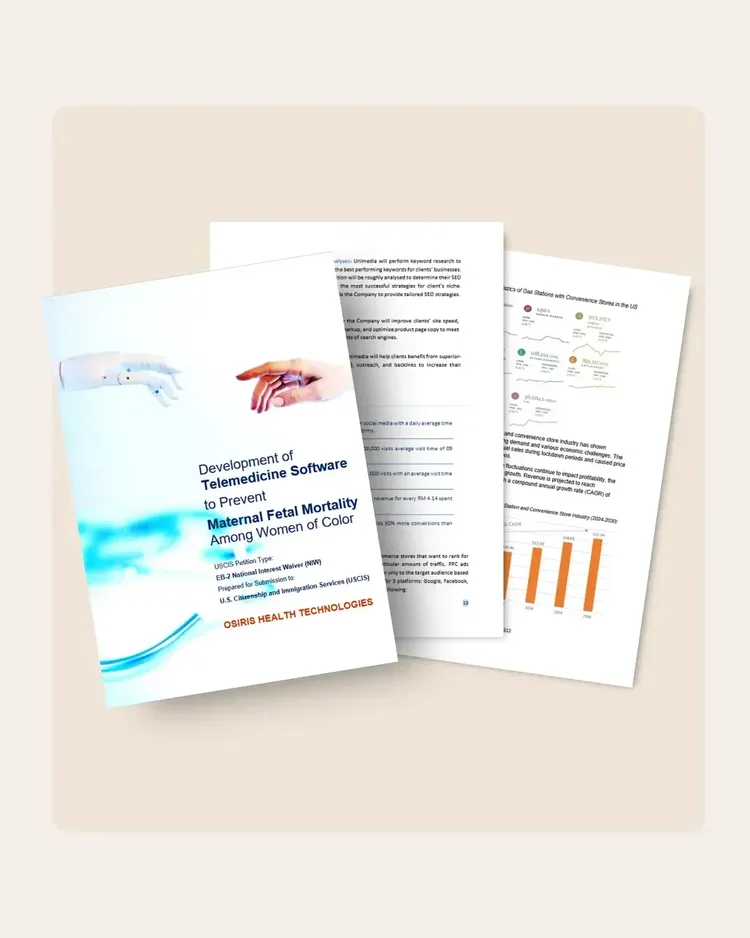
Endeavor Statement vs. Business Plan in EB-2 NIW Petitions: What’s the Difference?
EB-2 NIW applicants often confuse the endeavor statement with the business or professional plan. This article explains how the two documents differ, how adjudicators use each one, and how they work together in a coherent NIW petition.

What Makes a Business Plan USCIS-Compliant? A Practical Guide for E-2, EB-5, NIW, and L-1A Visa Applicants
This guide breaks down what makes a business plan compliant for immigration purposes, with practical insights for E-2, L-1A, EB-5, and EB-2 NIW petitions.
How We Helped a Client Respond to an EB-2 NIW RFE With a Stronger Business Plan
How We Helped a Client Respond to an EB-2 NIW RFE With a Stronger Business Plan