

Case Study: Strengthening a Previously Rejected L-1A Business Plan
This L-1A business plan case study explains how a previously rejected new office petition was strengthened by improving the staffing plan, executive capacity narrative, operational structure, and USCIS-focused business planning logic.
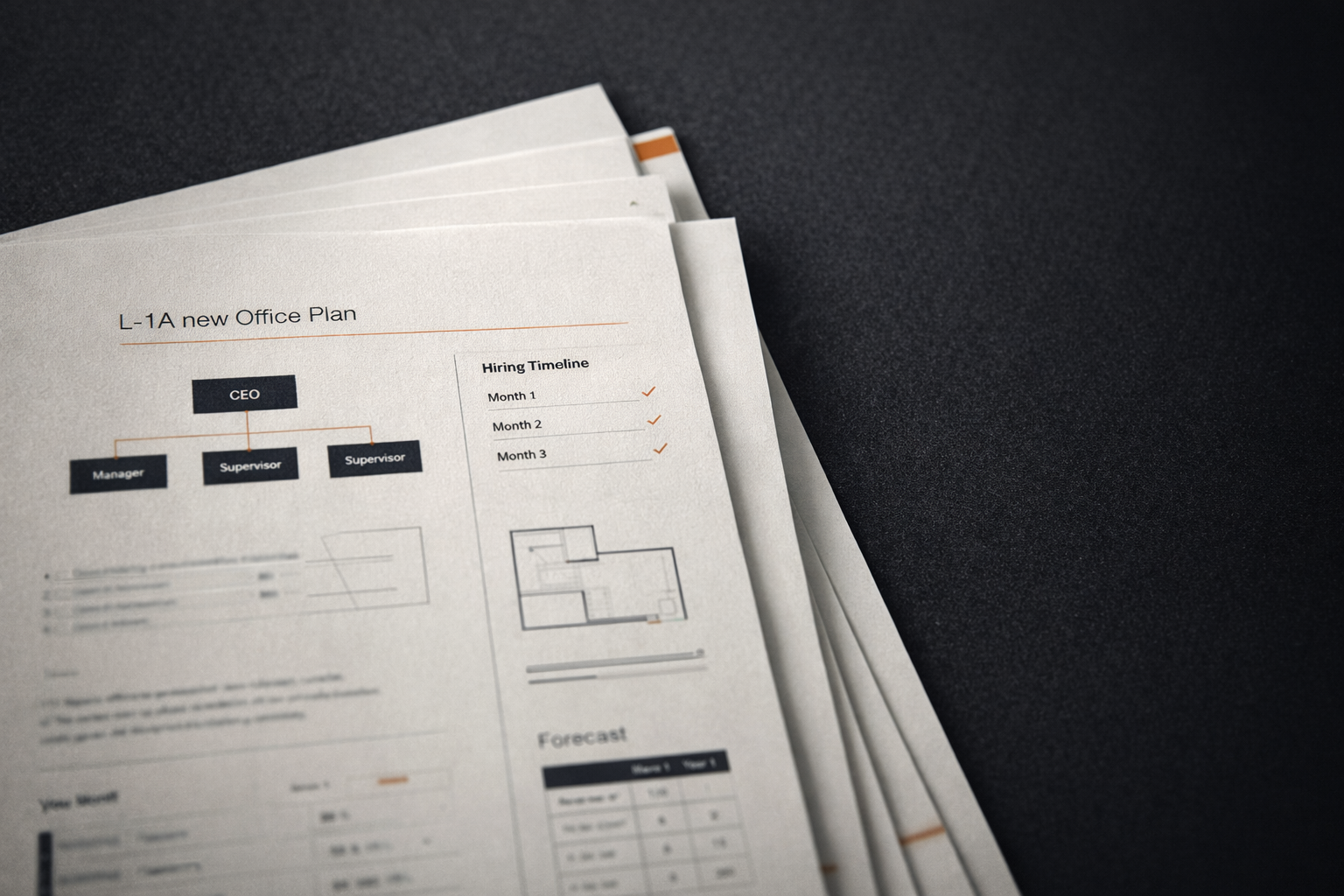
L-1A New Office vs. Existing Office: How the L1 Visa Business Plan Strategy Differs
New office and existing office L-1A petitions operate under the same statute but are evaluated through entirely different evidentiary frameworks. This article breaks down how business plan strategy shifts between the two, what USCIS is actually assessing, and why many filings fail despite otherwise viable businesses.

Expanding Your Canadian Business to the U.S.: What the L-1A Visa Requires and What Your L1 Business Plan Needs to Show
For Canadian companies using the L-1A new office route, the initial approval is granted for only one year, which makes the first business plan more than a filing document — it becomes the benchmark USCIS will later measure the U.S. operation against. At extension, the agency will look not just at whether the business exists, but whether it developed in a manner consistent with the original petition, including staffing, revenue, and the transferee’s executive or managerial role. This is why a strong L-1A business plan must be realistic, well-supported, and built to withstand extension-stage scrutiny, not simply to make the initial filing look ambitious.
How an L-1A New Office Business Plan Differs From a Standard Business Plan
An L-1A new office business plan is not just a standard business plan with immigration wording added on top. It must do more than describe the business opportunity. It must also show how the new U.S. operation will be structured, staffed, and developed to support a qualifying executive or managerial role within the required timeframe.